by RICK DANLEY // July 15, 2016
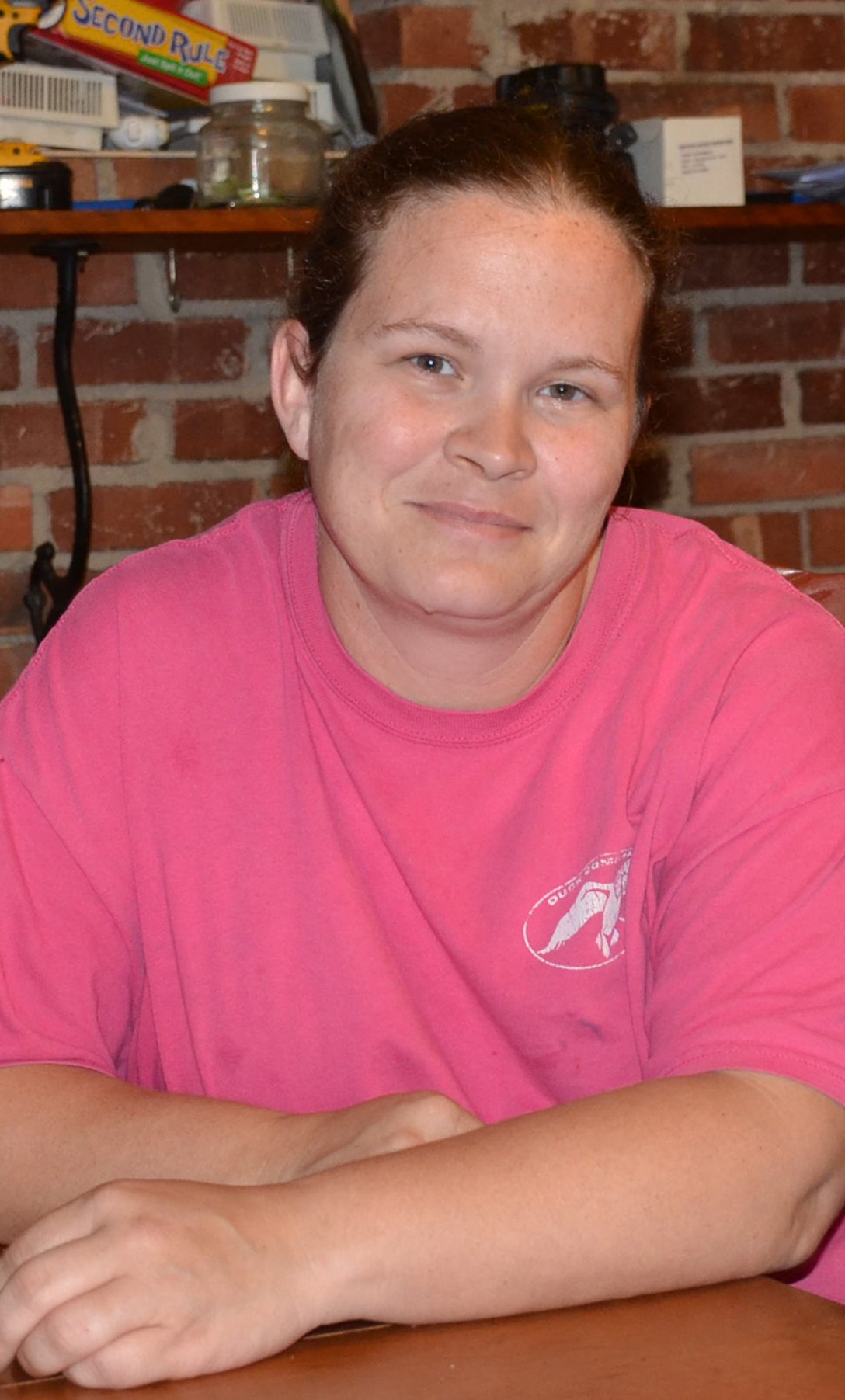
In 2003, Shauna Berntsen entered Allen Community College on a softball scholarship. Not long after Valentine’s Day of that year, her enrollment was annulled and the 19-year-old was deployed to Iraq. She had completed basic training the previous year, but had hoped to postpone active duty service until after she’d graduated college. But, like thousands of other young Americans captured in the quickly churning machinery of that war, Berntsen found herself in no time stationed in Baghdad, attached to a unit from Iowa, running convoy missions down perilous desert roads 7,000 miles from home.
Even today, she recalls flinching at the explosions that ricocheted through the night air when she first arrived in that country. Eventually, though, she would master the grim trick of determining, by the precise whistling sound of an RPG, its distance from the base. A knack which allowed her to sleep easier. But, of course, such an unnatural derangement of the senses leaves its mark.
“To this day, I still can’t drive in big cities,” says Berntsen. “After Iraq, I can’t do it. Even as a passenger, I take a Xanax before I hit the city and I look down at the ground and I do not look around. … And, as you can imagine, I really hate the Fourth of July.”
In 2004, Berntsen was allowed to come home. Her softball coach at ACC renewed her scholarship. She was older than most of her teammates. She was considered a non-traditional student. Plus, she was moved to a new position, first base. But all that was OK. She was back playing the game that has been for her a long-standing consolation in life, especially during a tough childhood.
One fall night during that first year back, Berntsen and the team headed out to a bar downtown. “Girls’ night,” remembers Berntsen. There, she met Brandon Berntsen, and “well, then, you know — whoops.”
Pretty soon, Shauna and Brandon were a couple. Not long after, Shauna was pregnant.
The delivery was difficult — Berntsen’s hips wouldn’t open and the baby had to be removed through C-section — but ultimately successful.
Skye Berntsen was about 8 pounds and seemed, for a time, healthy.
Not long after her birth, however, Skye developed a chronic reflux disease, which appeared to cause her to stop breathing for long moments. The first time this happened, the Berntsens took their daughter to Children’s Mercy, in Kansas City, where they were told it was “OK,” recalls Berntsen. “They told us not to overreact.”
But then a month to the day after that doctor’s visit, Skye stopped breathing again.
It was pre-dawn, about 5 a.m. Skye was in the bed with her parents. Because of the reflux, after eating, Skye was supposed to remain sitting up for about 45 minutes. Both parents were exhausted on this night. Shauna asked Brandon to take over this round of watching Skye, so she could get some rest.
“I mean, she was right beside us. And when it happened — OK, I just forgot how to do CPR. I forgot. I forgot everything. I was lost. Brandon tried. But he couldn’t bring her back.”
Shauna dialed 911. Officer Steve Womack of the Iola Police Department arrived and began to administer CPR. As he carried Skye toward the ambulance, Berntsen remembers him saying that it was OK, he could still feel a heartbeat. She was 2 months and 16 days old.
“After Skye died, I wanted to go back overseas to Iraq. I just didn’t want to be here anymore. But they wouldn’t let me. They won’t let you return to service, if something bad like that’s happened.”
Berntsen stumbled under the weight of her grief for years, and does still. But, in time, the couple conceived a second child, Isabelle, now 9. “When I got pregnant with Isabelle, that’s when I decided to get out of the military. I didn’t have a choice leaving Skye, but if I stayed in the military, I was making a choice to leave Isabelle behind and I couldn’t bring myself to do it.”
Next, there was Hunter, now 6, and Jaxson, 3.
EARLIER THIS month, the Register began a project of profiling families who have decided to take the SNAP Challenge, a monthlong summons initiated by the Iola-based Humanity House that asks families to limit their food budget to the amount received by the average food stamp recipient.
The Register is also getting to know families who, by circumstance and not by choice, are facing the challenges of making ends meet, of which the Berntsens are one.
The tight-knit family of five lives in a small shared-kitchen duplex near the post office in Iola.
The living arrangement is a bit accidental. Not long after Berntsen became pregnant with her youngest son, the bank foreclosed on the family’s previous home, and the couple was forced into bankruptcy.
Even recalling it now, the word turns to ash in her mouth. “It was very hard. We worked our butts off. But there was just no way we could keep up.” Besides the house payments, Berntsen was assaulted every month by a raft of new medical bills. “I just told Brandon — we can’t dig out of this. I don’t see any way.”
Although the family continues to live paycheck to paycheck, the Berntsens are in a better place now than they’ve been in awhile.
Brandon, who has been consistently employed over the years, works as a lead at Precision International, and makes about $2,000 a month.
Berntsen is employed as a paraprofessional by the ANW Co-op. While that job doesn’t generate any income during the summer, she works a handful of hours every week for A&B Cleaning in Iola.
The family’s combined monthly income during the summer stands at about $2,300, ballooning to a little more than $3,000 during the school year.
Rent is $300 a month. Health insurance for the family is roughly the same. Then there are utilities and all the other expenses that follow from raising three small children.
Berntsen regrets that she can’t feed her family the fresh fruits and vegetables that she’d buy them if she were better off. “To keep the money lasting, you’re having to feed them hot dogs and macaroni-and-cheese and Ramen noodles, and I know that’s not healthy. But they don’t go hungry, and I know there are a lot of people worse off.”
And she’s keen to protect her kids from the intense status bigotry of school age children. She tries to find second-hand versions of popular clothing, for instance. “Because I don’t want them to be picked on. I know what that was like from being a kid,” says Berntsen, who was raised by an unemployed, alcoholic father between Iola and Neosho Falls (her mother, an addict, was always “out of the picture”).
“My dad didn’t give a crap what I was wearing. My ball glove when I was a kid? The reason it was so great is because Joe and Cindy Folk” — who Berntsen refers to as her “softball parents” — “bought it for me.”
The Berntsens benefited from SNAP dollars two summers ago, but today receive nothing in the way of public assistance. But she doesn’t begrudge those who do. The best antidote to the flush of resentment some people experience when they see their tax dollars going to a family they deem undeserving, says Berntsen, is to peer more closely at that family’s life. Everybody has a story.
“This is what I tell my kids all the time: You don’t know what’s going on in their lives. Don’t judge them. You don’t know what’s happened.”
And she would know. The planet asked a lot of Shauna Berntsen between 2003 and 2006. She endured, in the loss of her child, the kind of pain that tears at the deepest parts of you. And, in serving her country at war, she collected psychic wounds which have permanently altered her relationship to her environment.
And yet it has always been Berntsen’s intention to give back, and that part of her remains. Today, she is completing her master’s degree in special education. And, in 2006, shortly after the death of Skye, when the infant’s life insurance policy delivered $10,000 to the young couple — who, then as now, could have used the money — they gave it to Allen Community College to create a scholarship for single parents who want to gain an education.
This article first appeared in The Iola Register on July 15, 2016.
 RG danley