By RICK DANLEY // September 8, 2018
This is part two of a two-part series. In part one, former professional jockey and new ACC ag instructor Josh Boyd recalled the horse racing accident that nearly cost him his life. Subscribers can read part one here.
It’s around 10 o’clock on a rainy Thursday morning. Josh Boyd commandeers an empty classroom at Allen Community College. Boyd is carrying a DVD — the only one of its kind — which it took him three difficult years to liberate from the top brass at the Sunland Park Racetrack & Casino, in Sunland Park, N.M. The video is of Boyd’s last race as a professional jockey, and of the accident that ended his career.
Boyd tinkers a while with the DVD console until, eventually, a still image is projected onto the classroom’s large smartboard. Boyd turns off the lights in the room and presses play. It’s grainy, the footage nearly 14 years old. Lines of chyron at the bottom of the screen tell the TV audience a little about each horse and rider. And there’s some preliminary audio commentary, too. A broadcaster, an Australian by the sound of it, describes the expectations for the race while the jockeys load their horses into the starting gates: “Cuervo Brown is in. There’s two or three still to come. New Car Caviar, Secret Looker, Marty’s Valentine… OK, almost ready for a start.”
THE VIDEO replays the entire January 30, 2005, race from three separate angles. There are two side views, which show the point at which Boyd, just inside the quarter pole, is suddenly unseated from his horse. The jockey hits the dirt and is immediately tumbled beneath the next horse, who spits Boyd out onto his hands and knees, at which point the final trailing horse, New Car Caviar, plows straight through Boyd’s right temple. “Racing for home, it’s Secret Looker, Marty’s Valentine second… Secret Looker in front but [inaudible] chomping away on the outside with every stride. Oh, we’ve had a fall, we’ve had a fall! A rider’s come off and it’s Cuervo Brown who’s crashed…”
But it’s this third angle, the straight-ahead shot, the shot that shows the pack of horses charging straight toward the camera, that is the hardest to watch.
In this one, you see Boyd hit the ground, then pop up on all fours, where he seems at the point of getting up — but there’s no time. New Car Caviar is heading straight toward Boyd. The urge is to shout at the fallen rider, “Watch out! Move!”
The direct impact to the side of Boyd’s head is so hard that his body helicopters through the air, before being delivered back to earth, where it lays motionless, quiet, a bundle of bright jockey silks on a wide dirt track.
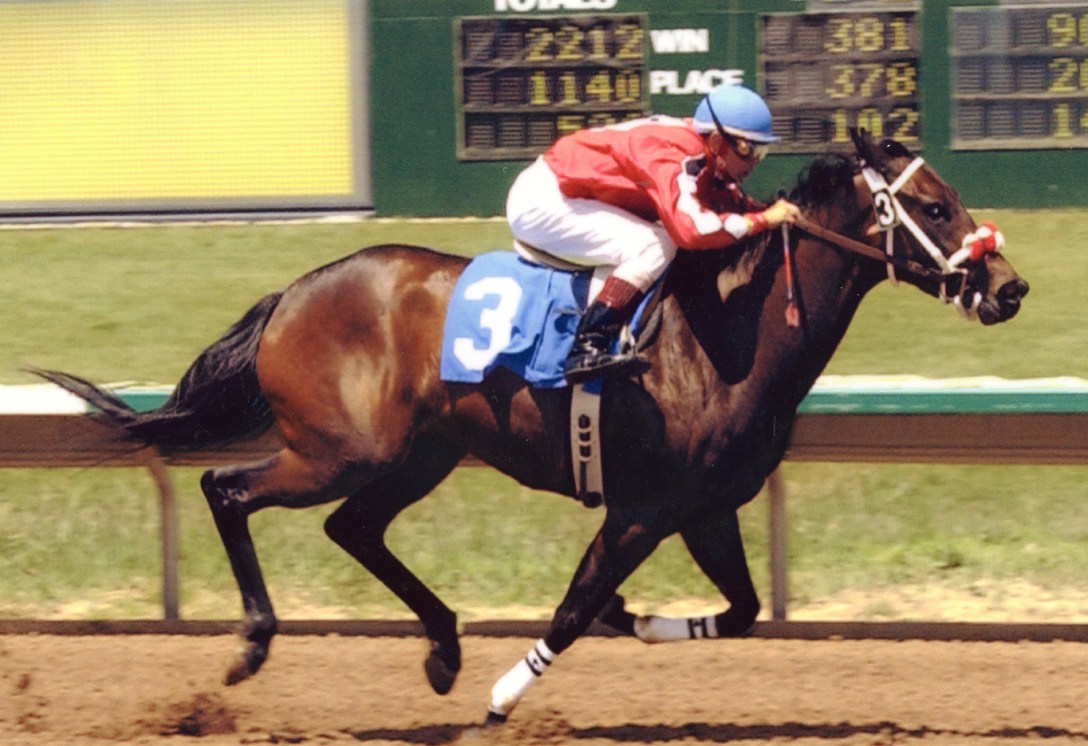
But there’s money on this race and so the camera abandons Boyd and pans back toward the finish line, where the announcer narrates the race’s neck-and-neck finish. We follow the smiling victor into the winner’s circle, and then the coverage pauses for a brief break before returning to announce the start of the afternoon’s eighth race.
“Welcome back, racing fans. We hope that Josh Boyd was not seriously injured in that mishap in our seventh. Let’s try to handicap the eighth as it’s coming up in 14 minutes…”
IT’S AT THIS point while watching the video that Boyd’s eyes well up. “It’s not so much watching the wreck that bothers me,” said Boyd. “It’s when the announcer says ‘We hope Josh Boyd is not seriously injured in that wreck.’ Because, obviously, I know how bad it was, I know that it was serious.”
From the track, Boyd was rushed into emergency brain surgery at a hospital in El Paso. Doctors removed damaged portions of his brain and attended to his shattered skull. He suffered two strokes while in the operating theater. His life hung in the balance. If he made it, doctors couldn’t say whether he’d be paralyzed. At the moment, however, there was no choice except to plunge Josh Boyd into a coma, and so they did.
After 45 uncertain days, this smart, articulate, physically gifted young man — he was 29 at the time — surfaced from his long sleep. He was alive. He wasn’t paralyzed. But he did find himself reduced, in his motor skills and in most of his cognitive capacities, to the level of a 4-year-old. Besides being blind in one eye, Boyd would have to learn to walk again, learn to talk again, learn to comprehend basic information again. In a word, he would have to start all over.
“Adapt and overcome. This is the message I like to share with my students,” said Boyd, who is the new ag instructor and livestock judging coach at ACC. “You have things that come up in your life, everyone does. But you have to adapt your life and do everything possible to overcome those circumstances that affect you. Adapt and overcome, adapt and overcome.”
JOSH BOYD was training and breaking horses by the time he was 15. The Boyds, who had a cattle ranch and horse operation in central New Mexico, 10 miles north of a tiny town called Mountainair, dealt mostly with cutting horses and saddle horses, but they broke their fair share of juvenile racehorses, too.
In this last category, Boyd was a natural.
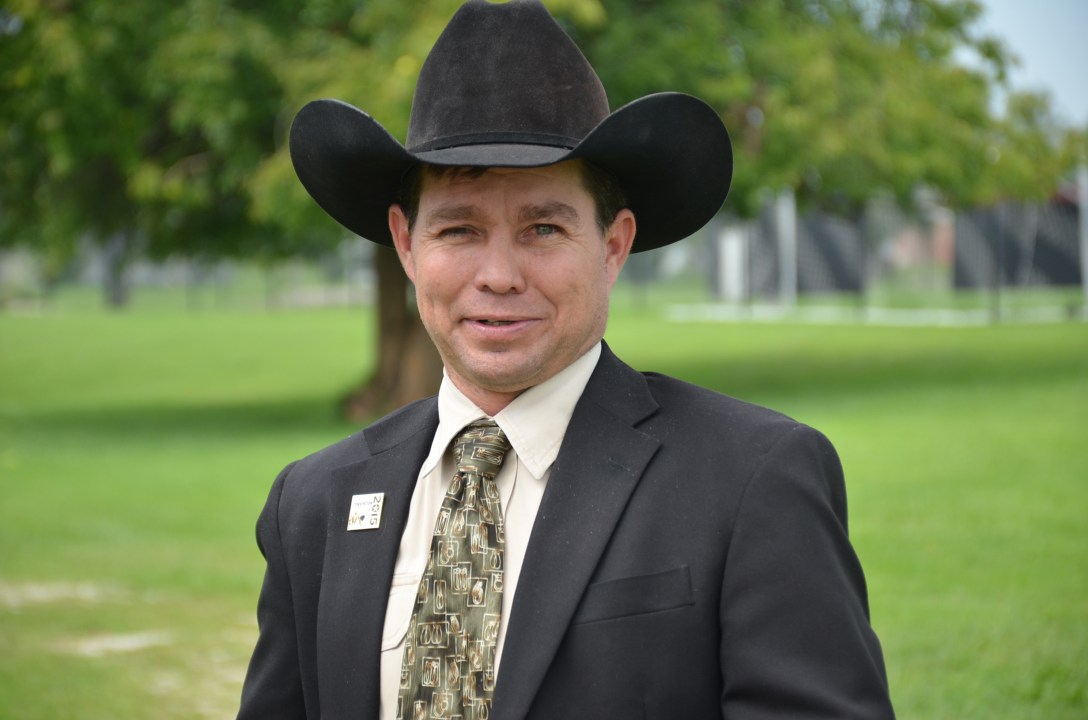
By his senior year of high school, Boyd was galloping horses at the big racetracks in Albuquerque and Santa Fe. He’d spend the morning at the track, exercising the horses, before dashing off to school in the early afternoon.
By the time Boyd graduated high school — at which point, the wunderkind rider stood 4-foot-9-inches tall and weighed 80 pounds — his career as a professional jockey was already set in motion.
To become an apprentice jockey — or a “bug” rider, as they call it in the jockey colony — you have to earn the official approval of three personnel in the horseracing world. An older jockey has to verify that you’re a capable rider, a trainer has to confirm that you can handle horses, and the racetrack “starter” has to OK you out of the gates. At this point, a jockey can approach the racing stewards in pursuit of an apprentice license, which is good for a full year before that rider advances to “journeyman” status.
It wasn’t long after acquiring his apprentice license that Boyd won his first professional race, at the Downs in Santa Fe. After that he never really slowed down. And after three months racing in his home state, Boyd was encouraged to take his talents to Turf Paradise, a well-regarded racetrack in Phoenix, which attracts big-name trainers from California. It’s a good place for a jockey to be discovered.
But after only three months in Phoenix, a small college in Texas tracked Boyd down and offered him a generous rodeo scholarship. (This may be the place to point out that Boyd is also a champion bull rider, which he always regarded as a safer sideline to his career as a jockey.)
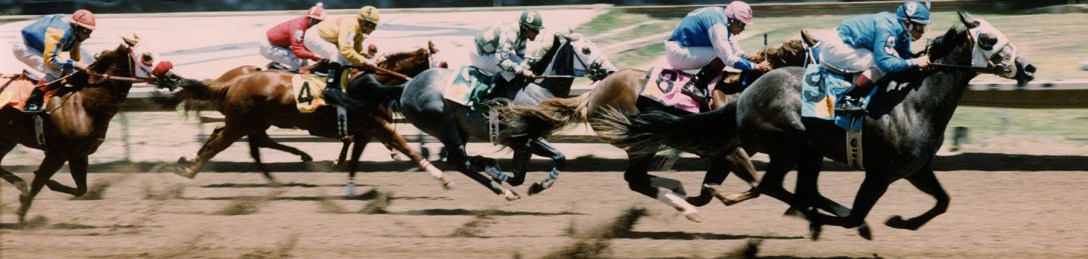
The racing stewards agreed to put Boyd’s bug on hold, and so the teenager packed up his boots and his belt buckles and headed to east Texas, first to Wharton County Junior College and then to Sam Houston State University in Huntsville, where, when he wasn’t on top of one large animal or another, he continued to hone his abilities as a livestock judge.
BUT JOCKEYING never strayed far from Boyd’s mind. In one of his first jobs after leaving college, Boyd managed a dude ranch near Bandera, a town smackdab in the middle of Texas Hill Country. Tourists would arrive primed to have a true “ranch experience,” to ride, to wrangle, to wear cowboy hats, to test drive their new denim, to tangle a lasso and shout yippee. There was a high volume of European clientele at Loma de Blanca, remembered Boyd, and probably a lot of people who’d seen the movie “City Slickers.”
But it was in Texas, after befriending a fellow jockey at the nearby Cowboy Church, that Boyd’s racing career began in earnest. The jockey asked Boyd to come help him gallop horses at a racehorse farm down the road. Boyd obliged.
Being back in the jockey saddle was enough to stir all of Boyd’s old passions. Boyd left his ranch duties soon after and officially reinstated his apprentice license.
During the next few years Boyd became one of the most successful apprentice — and then, later, journeyman — jockeys in the country.
He was named the leading jockey at San Antonio’s Retama Park, at Sam Houston Race Park in Houston, at Lone Star Park in Grand Prairie. Recruited to ride the East Coast circuit, Boyd raced in meets up and down the seaboard, from New York to Florida. Belmont Park. Preakness. He raced in the United Kingdom. In Canada. In Mexico City.
Eventually, in a move to be closer to his parents after the sudden death of his older brother in a traffic accident, Boyd returned to New Mexico, where his win streak as a rider never ebbed.
In his 10-year career as a jockey, Boyd won more than $1.8 million in purse money. He had homes in San Antonio, Fort Worth, Houston, another place in New Mexico. He once won $50,000 at a single meet. And, given the longevity of many jockeys, Boyd could have ridden for another 20 or 30 years.
But it wasn’t to be. On a cloudless January day in 2005, that life evaporated and a new one lay in wait.
AFTER THE accident, Boyd spent the next four years in intensive rehabilitation. He and his wife and young daughter lived in the mountains outside Albuquerque. He was happy, for the most part; he was walking, talking, he’d exceeded doctors’ expectations. And yet, still, a certain grief clung to him knowing that he’d never ride horses again.
But Boyd wasn’t born to stew. One evening, he and his wife found themselves drowning in the rising flood of official paperwork that had been pouring in through their mailbox since the accident — disability info, insurance reports, medical bills, legal forms.
“I was sitting on the couch that night,” remembered Boyd, “and I just got up. I told my wife, ‘Forget it, I’m going to find something else to do.’ I said, ‘Look, I’ve already got two years of higher education. What do you think about me going back to college and getting a degree?’ I just thought, I’m not going to sit around and be a vegetable and not do anything.”
Ashley agreed. “Go get your degree.”
It started well. Boyd, initially uncertain as to whether his brain was sufficiently healed to handle the cognitive burden of a full college workload, excelled in classes. He loved it. It was now official: He was finally embarking on his new life.
But then, after the end of his very first semester, Ashley — the same woman who’d sprinted out to the track on that day in 2005 as Boyd was loaded into the back of an ambulance — told her husband that she wanted a divorce. She loved him but was not in love with him — that line. This, to Boyd, was as painful as anything that had come before.
But, Boyd being Boyd, he persisted. “Adapt and overcome” is his rule. Adapt and overcome.
And so Boyd moved south, to Las Cruces, where he transferred to New Mexico State University, from which he obtained, first, a bachelor’s degree in agricultural and extension education, and then, eventually, his master’s.
This marks the point in Boyd’s long odyssey when the brain-injured jockey transformed himself into the college professor.
And yet Boyd isn’t prepared to waste, in his new profession, the lessons he learned in his old one. In fact, he’s eager to point out the links.
WE’LL IGNORE for the moment the many ways that college students are not like horses, and focus, for now, on the ways that they are.
“Just like a lot of kids, any young horse is going to have their spurts,” explained Boyd. “You have those real solid students and horses that are receptive of everything you’re showing them and teaching them. And then maybe you have those outliers, those rebels.
“When people ask me how I do so well with horses,” continued Boyd, “I say, ‘You know, I’ve always treated a horse [I’m training] like a human being.’ I show that horse how to execute a concept, but I don’t force the animal to do so. … That was what I was taught as a young kid from my father. There’s no reason to rush a horse or be rough with a horse. If you’re calm, quiet, that horse is going to be receptive. There again, it’s the same with students. Knowing a horse’s demeanor or a student’s demeanor, knowing a little about their background helps. And breeding has a lot to do with it.”
With students?
“OK, now I’m talking horses again,” said Boyd. “But it’s the same in that you have to be sensitive to a horse’s — or a student’s — demeanor before you can truly know the best way to help them.”
BOYD, a modest, unfailingly polite, deeply friendly man, recalled the moment in his long recovery when he knew everything was going to be OK.
“About four months after that last rehab, I was out in the barn piddling around. Well, I saddled up the horse that my girls learned to ride on. So my wife, Ashley, she looks out the window and she sees me leading that horse over to our little arena. Nobody knew I was doing what I was doing. See, I was told that I never could ride again. Well, my wife, she comes running out there. She goes, ‘What do you think you’re doing?’ I said, ‘I’m going to go ride.’ She said, ‘You were told no, you cannot ride.’ I said, ‘I’m riding.’ She sits there for a second, then she says, ‘OK, if you’re going to do that, then I’m going to get another horse and ride right next to you.’”
That moment on the back of the horse was for Boyd like a beacon from his old life sweeping across the dark horizon of his new one, connecting, however fleetingly, the person he was then with the person he is now. But perhaps, too, these are the moments that expose the fiction at the very heart of the notion of a segmented life. A life is only ever one continuous thing, a thing that expands infinitely to include all of the events and people that enter into it, a thing that some days weighs as much as a planet and is on other days as light as air, but which is, inarguably, yours to carry.
“When I stepped up on the back of that horse, the weight of the world just lifted right off of my shoulders. I knew horses were my life, and I knew then that I could still ride. I can’t explain exactly what it was,” said Boyd, pausing, then exhaling deeply. “It was more like thank you, thank you, thank you, thank you.”
 RG danley